Ultherapy
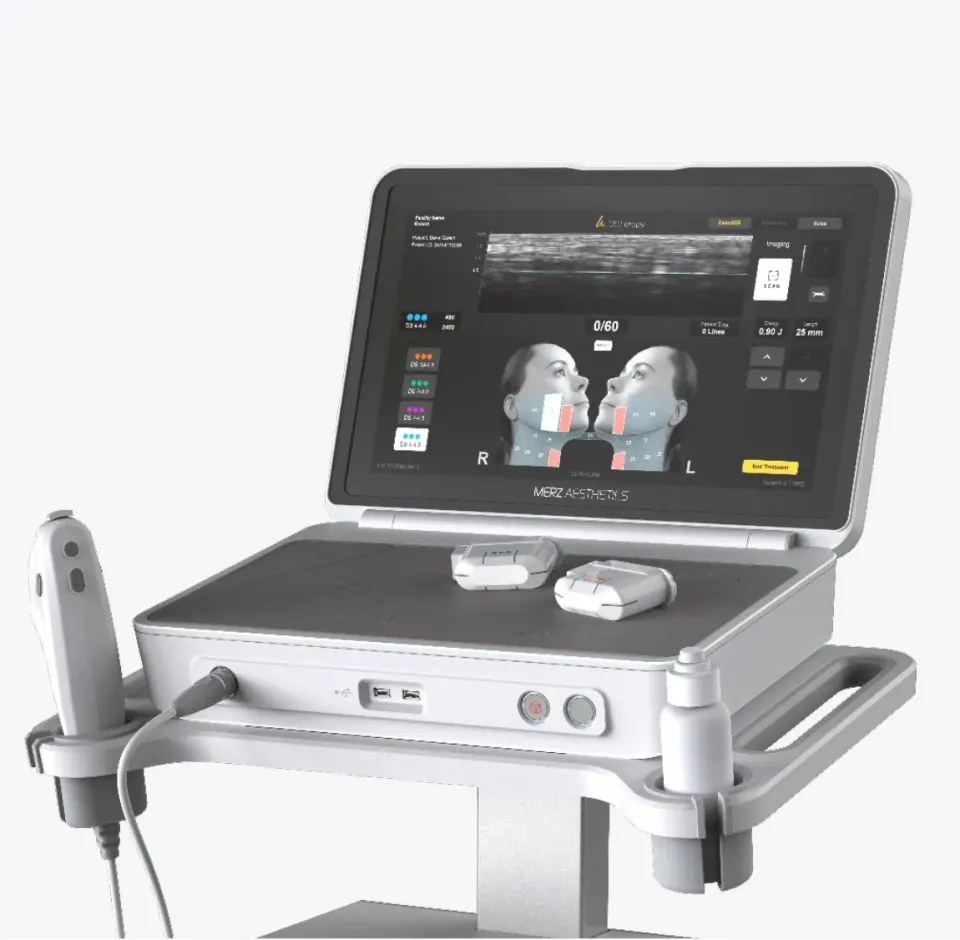
A non-invasive treatment that is FDA-approved to lift the skin, Ultherapy stimulates collagen production by delivering ultrasound-focused energy to the skin’s foundational layer to non- invasively target the same deep tissue planes as a modern facelift, without cutting or disrupting the surface of the skin.
The Ulthera® System uses a patented DeepSEE® technology to provide real-time ultrasound visualisation of the skin down to 8mm. The non-invasive devices allow clinicians to see where they are treating and ensures the energy is being delivered to the correct tissue depth proving it to be beneficial.
 Reviewed by Dr Zubin Firdos Medora, Medical Director
Last reviewed 13 October 2026
About Ultherapy
The energy also triggers a natural response under the skin, allowing it to jumpstart the regenerative process that produces fresh and new collagen.
Which areas can Ultherapy treat?
Ultherapy is cleared to lift the brow and the skin under the chin and on the neck, and to improve lines on the chest (décolletage). It is also widely used to firm the lower face and jawline.
Who is Ultherapy suitable for?
Ultherapy suits people with mild to moderate skin laxity who want a firmer, more lifted look without surgery. It does not replace a surgical facelift when there is a lot of loose skin. Your doctor will check your skin and medical history at your consultation before recommending it.

What happens during the treatment?
Your doctor uses ultrasound imaging to see the layers under your skin, then delivers focused energy at set depths. A session usually takes 30 to 90 minutes, depending on how many areas are treated. You may feel short pulses of heat and tingling while the energy is delivered, and your doctor will discuss ways to keep you comfortable.
Is there any downtime?
Most people return to their normal activities straight away. The skin may look a little red or feel slightly swollen, tender or tingly for a few days. Bruising is uncommon.

When will I see results and how long do they last?
Some people notice a little firmness soon after treatment, but the main lift builds over 2 to 3 months as new collagen forms and can continue to improve for up to 6 months. Results usually last around a year, although your skin keeps ageing naturally. Most people need one session, and some choose a top-up treatment each year.
Ultherapy or Ultraformer?
Both use focused ultrasound to lift and tighten skin. Ultherapy shows the skin layers on screen during treatment, while Ultraformer is a high-intensity focused ultrasound (HIFU) device with different settings. Read our guide to Ultherapy and HIFU, or ask your doctor which suits your skin.
Your doctor
Dr Zubin Firdos Medora
Medical Director
Every treatment plan starts with a consultation with Dr Medora. If surgery would suit you better, our partner oculoplastic surgeon can advise you.
MBBS (London), MRCSEd, MRCSGlasg, MMed (Surgery) Singapore, Dip. Derm (UK)

How many Ultherapy sessions will I need?
Most people need one session. Some benefit from more, depending on their skin and the areas treated. Your doctor will advise you at your consultation.
Does Ultherapy hurt?
You may feel short pulses of heat and tingling during treatment. Your doctor will discuss options to keep you comfortable.
Can I go back to work after Ultherapy?
Yes. Most people return to work and their normal routine the same day.